Create Pay Stubs Anytime, Anywhere with Our Mobile App. Learn More Learn More
Understand each element on the pay stub such as Company, Employee & Salary information, deductions and taxes on the paystub.
- Updated on Feb 08, 2023 - 11:00 AM by 123PayStubs Team
A pay stub is a proof of payment made to the employee, which itemizes the earnings and deductions for a particular pay period and the year-to-date total.
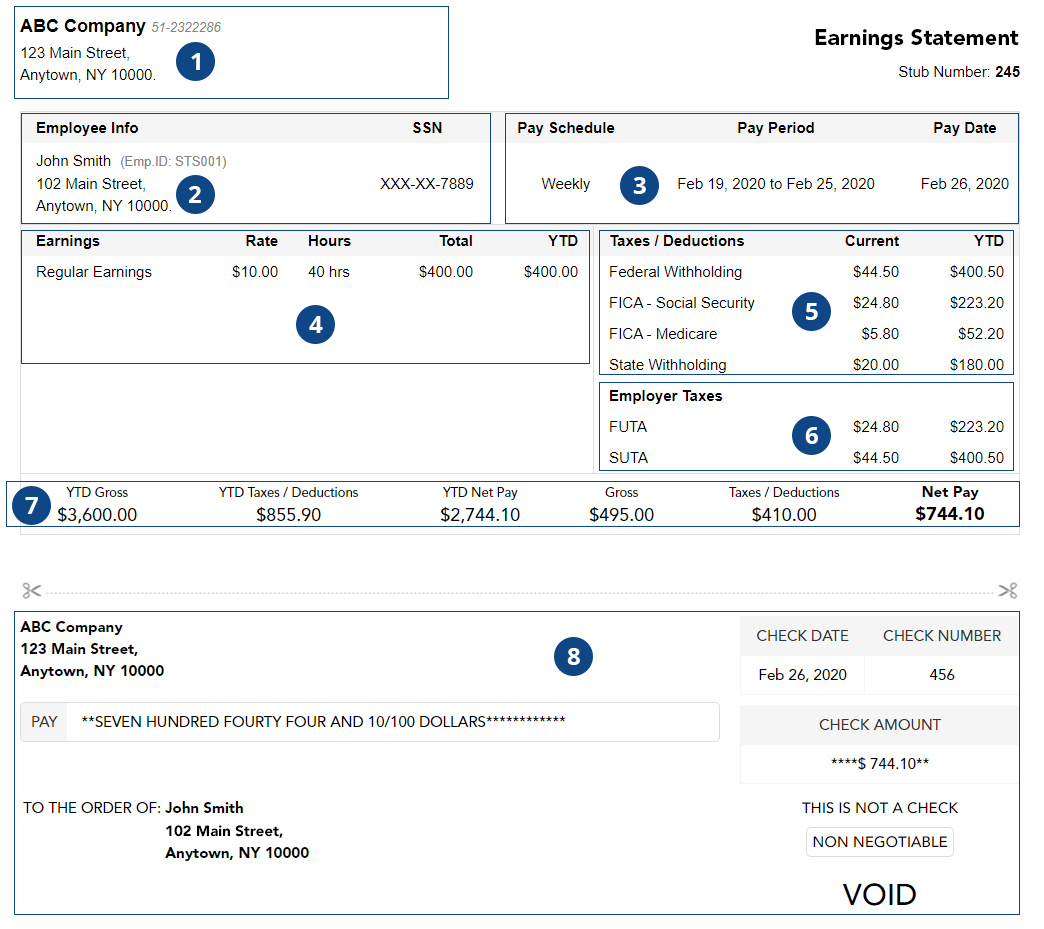
This section includes information about the employer such as Company Name, EIN, and Company Address. Some businesses opt to include the company logo in the pay stub.
This section lists information about the employee such as Name, Address, and last four digits of SSN.
Here you can find the information about the pay schedule, pay period, and pay day.
Click here to know the difference between Payday, Pay schedule, and Pay period.
This includes the wages earned by the employee for the pay period and year-to-date (YTD). It also includes hours worked and the rate paid. The common earnings types are as follows
This section helps you understand pay stub deductions. This lists the statutory deductions and taxes applicable to the pay period. This includes federal withholding, FICA taxes (Social security and Medicare), and state withholding. This may include state, city, and local deductions such as state disability insurance and family leave benefits if mandated.
This includes taxes paid by the employer for the pay period such as FUTA & SUTA taxes. It may also include taxes paid by the employer specific to a state, city, or jurisdiction.
Here you can find the employee’s gross pay, taxes & deductions, and net pay for the pay period and YTD.
This section contains a copy of the voided check with the employee’s net pay for the record.